Chelsea Synon’s Monday starts like that of most other 25 year-olds. She wakes up, does her hair and makeup, and packs up to go to work. But when she gets dressed, her mum comes in to help; first with her pants, then shoes and socks. At her hospitality job, customers are oblivious to her pain as she smiles and chats throughout the day. But when she gets home in the evening, she has to sit down in the shower and is too exhausted to stand in the kitchen long enough to cook dinner.
Chelsea has a Tenosynovial Giant Cell Tumor (TGCT). TGCT is a rare type of tumour that grows locally in joints – like Chelsea’s hip. It’s a diagnosis that took Chelsea four years to obtain, and after eight years she still struggles with debilitating pain 24 hours a day.
While Chelsea’s tumour is rare, her experience with pain is not. Last year in Victoria, an inquiry into women’s pain found that 90% of respondents were living with chronic pain. Women routinely face long delays in diagnosis, dismissal and inadequate treatment.
A recent Four Corners investigation into unnecessary endometriosis surgeries has renewed calls for women to advocate for themselves in healthcare settings. Chelsea’s experience shows that might not be as easy as it sounds.
How Chelsea’s rare disease went undiagnosed for four years
Chelsea’s hip pain started at 17 when she was playing basketball, but it took over four years for an accurate diagnosis to be made.
“Originally, I was diagnosed with juvenile idiopathic arthritis at 17. Which is just unknown arthritis of a young person. I got treated for that for 4 years,” she said.
“After 4 years, I had another MRI scan and they found a tear in my hip. They wanted to go into surgery to fix that… during the surgery, the surgeon went in and just found a whole lot of mass that turned out to be the tumour that I’m now diagnosed with. Four years after the pain started, I was diagnosed.”
Approximately 140,000 misdiagnoses occur in Australia each year Chelsea’s misdiagnosis meant four years of increasing pain while taking medication for a condition she didn’t have. That early experience taught her the importance of fighting for what her body needs.
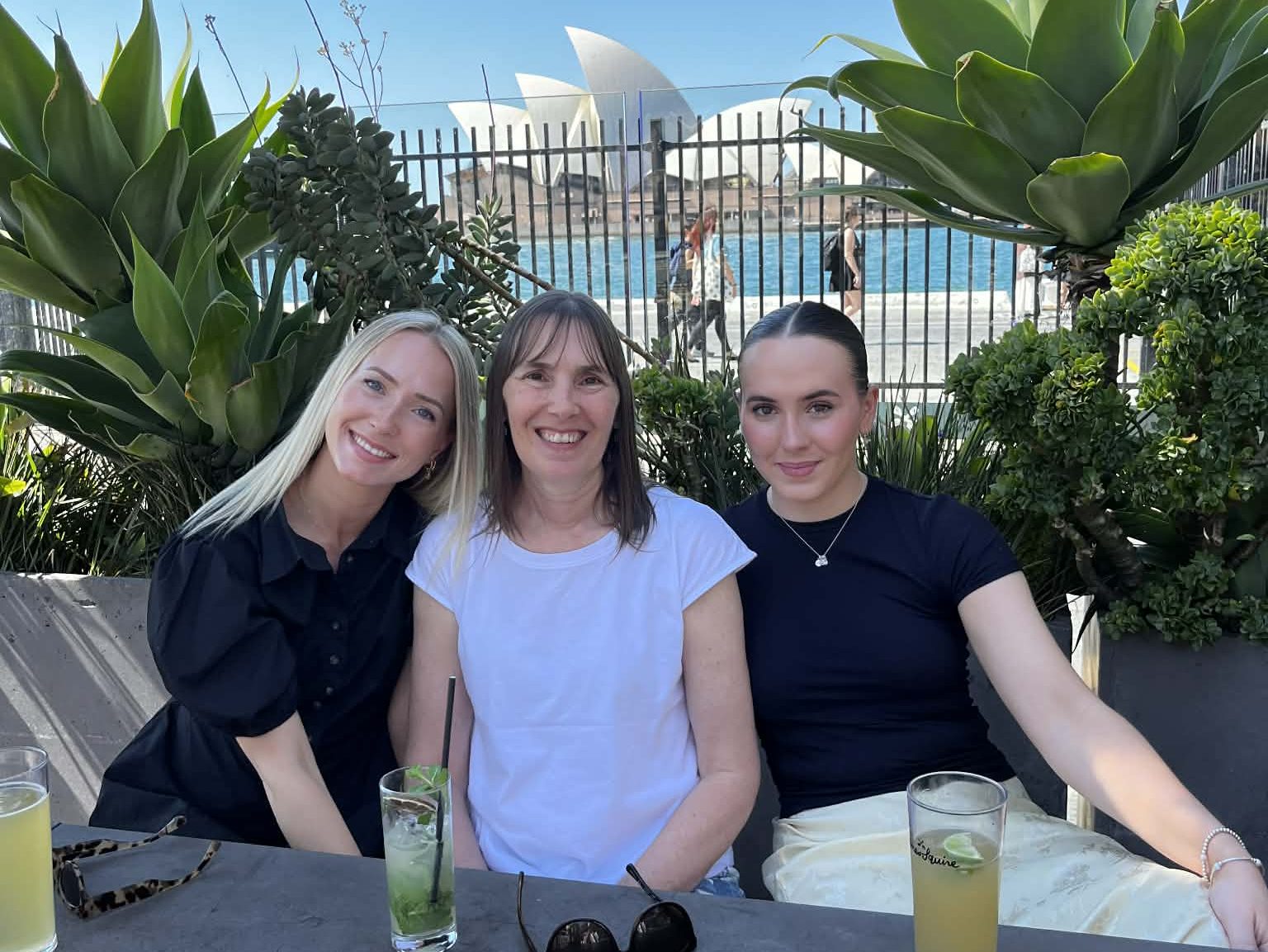
Chelsea (right) can’t imagine how she would navigate her condition without the support of her family including her sister (left), and her mum Stacie’s (centre) medical knowledge as a nurse. (Photo supplied by Chelsea Synon. Used with permission).
Why women often have to advocate for their own healthcare
Chelsea’s mum is a nurse and comes to every appointment with her. Together, they spend hours after work each week researching treatment options.
“I’m lucky that I’ve had my mum as a role model who will always advocate for me,” Chelsea said.
“I would see her doing that in our early appointments before I was even diagnosed… I grew up knowing that it was okay to advocate for yourself. Not everybody has that.”
People living with chronic conditions in Australia often have to navigate a complex mix of health professionals and service providers to meet their needs. Chelsea reels off a list of doctors, specialists and alternative medicine practices that they’ve tried to relieve her pain; over 25 different practitioners, and approximately $90,000 in surgeries and treatments.
She’s learnt to push for access to treatments that go beyond what the scans show and address her lived symptoms. She says this is often critical for her pain to be taken seriously by medical professionals.
Women’s pain is dismissed in healthcare
“I still get up every day. I put a smile on my face, brush my hair, put my makeup on… I look healthy. I look like any other 25-year-old. I feel like that face value of me puts a thought in their head that my symptoms aren’t as bad as they are.”
Two out of three women in Australia have experienced medical misogyny that most frequently looks like their pain being minimalised, often labelled ‘hysterical’ or ‘faking it’. For patients like Chelsea whose symptoms are externally invisible and not accurately captured by scans, this means that self-advocacy is essential. Yet Chelsea finds that when advocating, she has to walk a fine line in order to be taken seriously.
At one consultation, a doctor told her he didn’t want her as a patient if she was going to come and sit in his office and cry.
“I often find that if I start to tear up or cry in my appointments… people will have a standoffish attitude towards me because they think that I’m just an emotional little girl”
Chelsea is frequently hospitalised for severe pain and complications associated with her TGCT. (Photo supplied by Chelsea Synon. Used with permission).
The importance of self-advocacy for chronic conditions
Chelsea was once recommended a highly invasive, non-TGA-approved radiation treatment for her tumour. After her own extensive research and consulting with a radiographer who did not recommend the treatment, she returned to the doctor and suggested she’d prefer not to go down that route.
She was told that if she didn’t want his advice, he didn’t want her as a patient.
When she booked an appointment with a new surgeon in Melbourne, they told her they’d prefer she find someone else to treat her as they didn’t want to step on the previous surgeons’ toes.
Why patient centred care matters for patients with rare diseases
Dr. Sydney Stern is a researcher who was also diagnosed with TGCT at 17. She now specialises in treatments for rare diseases and runs TGCT Support, a global group that advocates for treatments that centre patient voices. She says as a young woman, Chelsea’s experience is the norm.
“Self-advocacy isn’t just important. It’s the only way to get care. I’m sure if Chelsea did nothing, she would have just repeatedly had scopes, wondering why they weren’t working.”
Treatment challenges for TGCT
Chelsea has just started taking a chemotherapy drug called imatinib.
Imatinib is approved in Australia for leukaemia and used internationally to treat TGCT. With the support of the Peter McCallum Cancer Centre, Chelsea has secured subsidised access to the drug through their compassionate grounds program. It’s a pathway she feels incredibly lucky to have accessed.
Going on imatinib wasn’t a decision taken lightly. Chelsea tells me about persistent nausea, hunger without an appetite, exhaustion but finding it impossible to sleep. With a resigned but characteristic resilience, she says,
“It could be worse… I’m lucky that the side effects haven’t been that bad.”
Accessing imatinib was only one part of the decision-making process. Like many women navigating complex and under-researched conditions, Chelsea also had to make difficult choices about her future fertility.
The long-term impacts of imatinib on women’s fertility haven’t been studied, and Chelsea also suspects she has endometriosis. Endometriosis is a highly painful condition that can cause fertility problems. Despite affecting approximately 1 in 7 women in Australia, it remains understudied and underfunded. For Chelsea, it meant misdiagnosis and ignored pain all over again.
A second chronic condition
At 16, Chelsea was hospitalised for severe abdominal pain during her period – pain so terrible, doctors initially thought it was a burst appendix. Sent home without answers, she spent years skipping periods with birth control pills to avoid the pain that came with them.
Chelsea and her mum kept looking for answers. Despite one gynaecologist suggesting she had an overactive pelvic floor, Chelsea (and her new gynaecologist) now believe she has endometriosis.
However, she hasn’t proceeded with a laparoscopy to formalise the diagnosis. “My hip is my priority,” she said.
As soon as I can get some relief from my hip and I have more funds to explore a new issue, I will get on top of that.”
Shortly before going on imatinib, Chelsea made the decision to freeze her eggs. A process that involved weeks of daily injections, heightened hormones and, as Chelsea puts it, “a lot of doctors looking up ya’ hoo ha,” it wasn’t a choice made lightly.
“At such a young age it’s hard to really come to terms with… I had to sign waivers that said that if I passed away, what did I want them to do with my eggs?”
Freezing her eggs was one more decision shaped by hours of research, specialist appointments, Medicare applications and difficult conversations about her future.
Chelsea hopes imatinib will deliver the same success it has delivered for other TGCT patients, but for now she continues to navigate every day with severe pain.
There are thousands of women in Australia who share Chelsea’s story. Ultimately she just wishes it wasn’t so hard to be heard.
“I just wish that people would be a bit more kind. Medical professionals and everyday people. You don’t know what somebody’s going through.”

 Evie Molloy
Leave a comment